Flagger Force
Turning a Legacy Website into a Recruiting Engine
The Rundown
Flagger Force employs more than 2,500 people across 15 states, and keeping that workforce staffed is core to the business. Their website had three jobs: win customers, recruit a steady stream of applicants, and serve current employees. On the old site, those jobs were competing with each other.
The site ran on a 10-year-old custom WordPress theme layered with years of patches. Employee-facing and customer-facing content were tangled together, routine updates risked breaking pages, and the original developer was no longer available to maintain it.
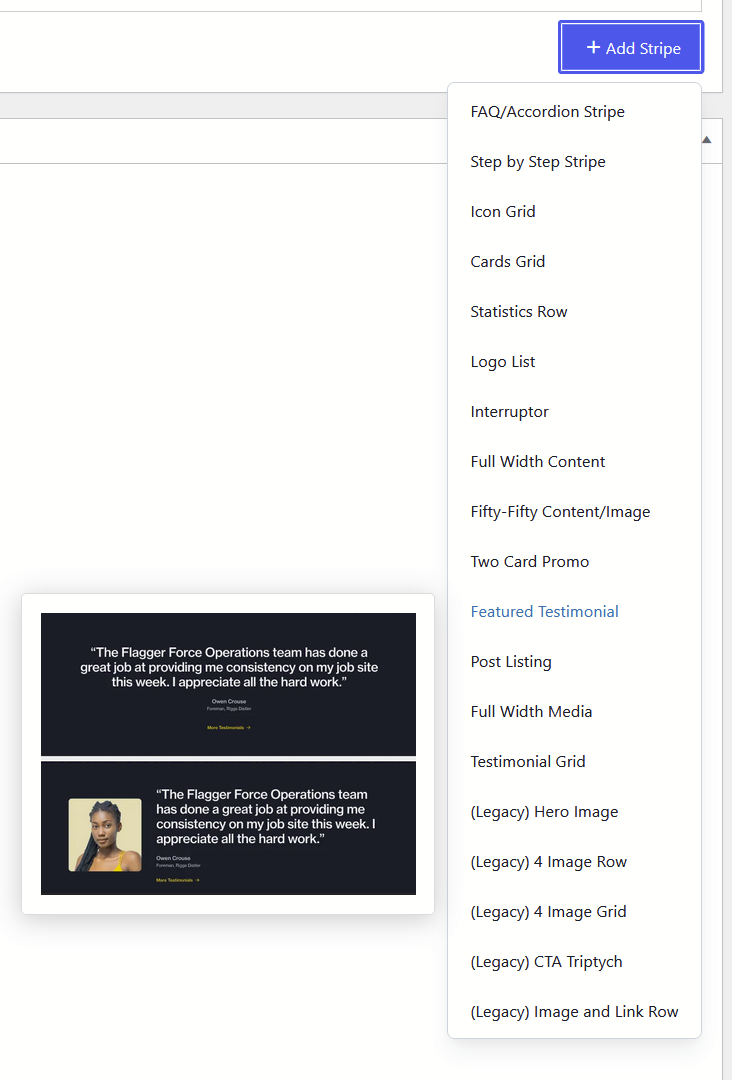
They knew they needed a new website that integrated with their recruitment platform, effectively separated internal employee-focused content and external-facing customer content, and allowed their team to easily manage content in-house without compromising the design.
The Results
- 33% higher engagement rate in the first six months after launch compared with the same period the prior year. Traffic held roughly steady, and more of those visitors engaged with the site.
- Plugins cut from 82 to 22: 57 standard plugins down to 19, and 25 must-use plugins down to 3.
- A decade-old theme replaced by a lean custom theme built from scratch with modern tooling.
- Applicants move from the website into iCIMS without re-entering their search, and recruitment source data comes along with them.
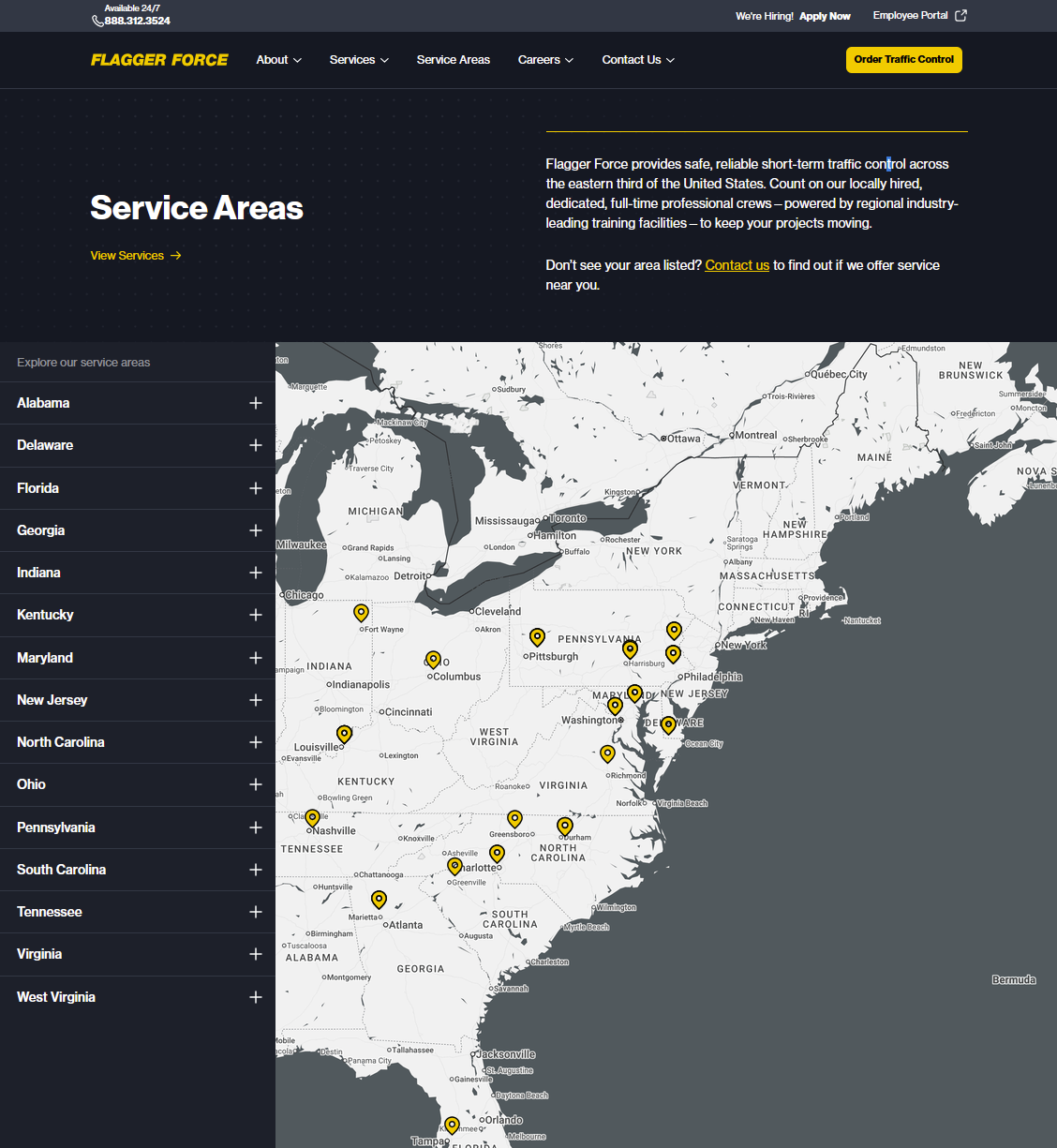
- Locations are entered once and stay current across the map, sidebar, and landing pages in all 15 states.
- Employee tools moved to their own site, leaving the public site focused on customers and recruiting.
- In-house content control, with continued support from MIND as part of a partnership that began in 2021.
Why MIND
MIND has supported Flagger Force’s website since 2021. We knew how their organization worked, had collaborative working relationships with their other vendors, and had a track record of solving problems together. When it was time to rebuild, the question was when, not who.
We worked alongside Flagger Force’s existing vendors, Armor and Grit Marketing Group. Armor designed the custom theme based on collaboration with Grit and MIND, and we built it.
What We Built
As often happens with web development projects, especially those that are large, multifaceted, and long-lived, the requirements evolved from start to finish. There were a lot of variables and considerations that needed to be accounted for, which required ongoing collaboration, flexibility, and innovative software solutions.
It was essential to be able to go with the flow, whether that was on a consulting basis to provide options for overcoming obstacles or implementing workarounds when things had to be done a certain way. The result was a clean custom theme with minimal plugins and low overhead, including several notable features:
- A recruiting pipeline connected to iCIMS
- A service area map that maintains itself
- An employee portal on its own site
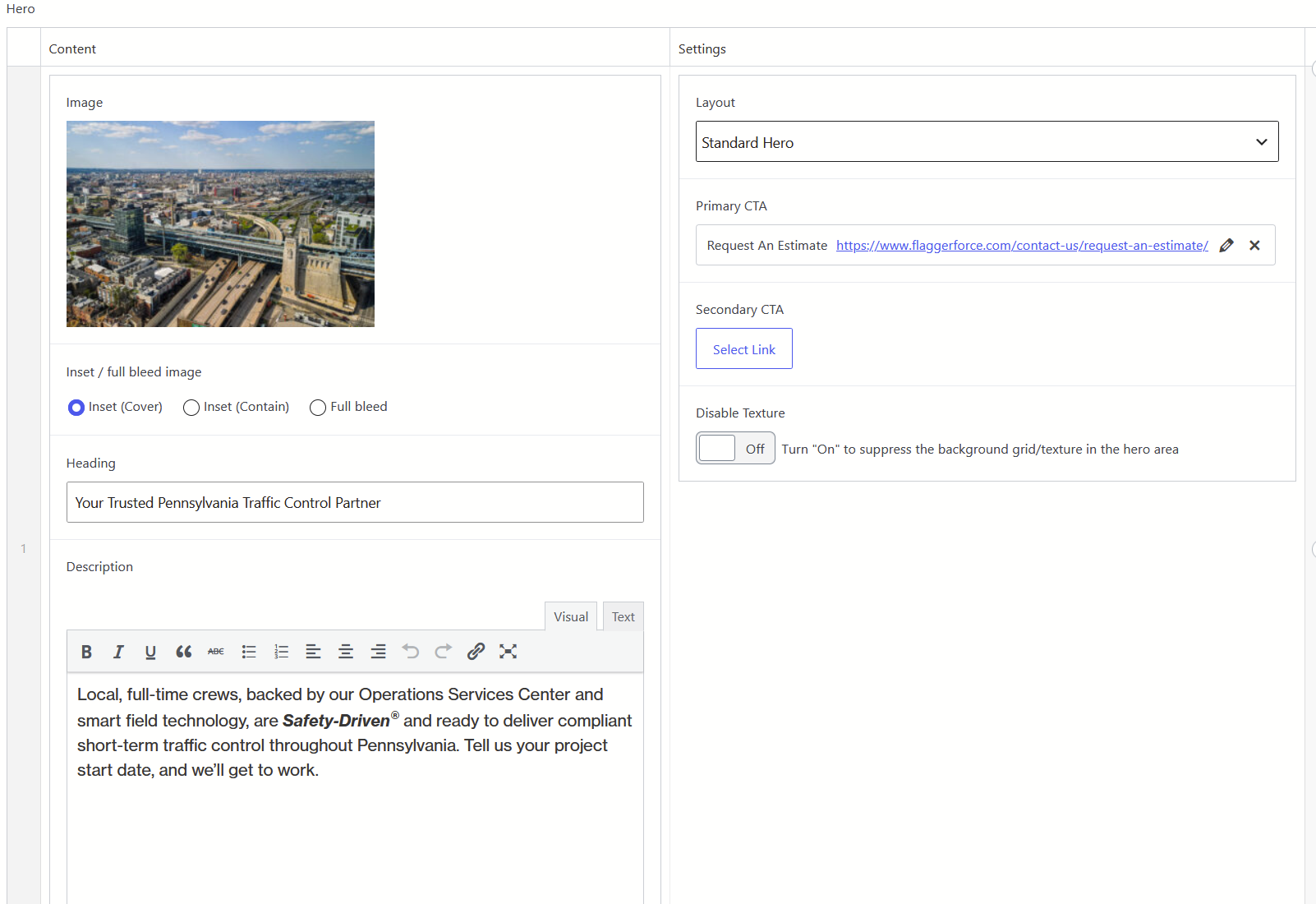
- A clean foundation the marketing team owns